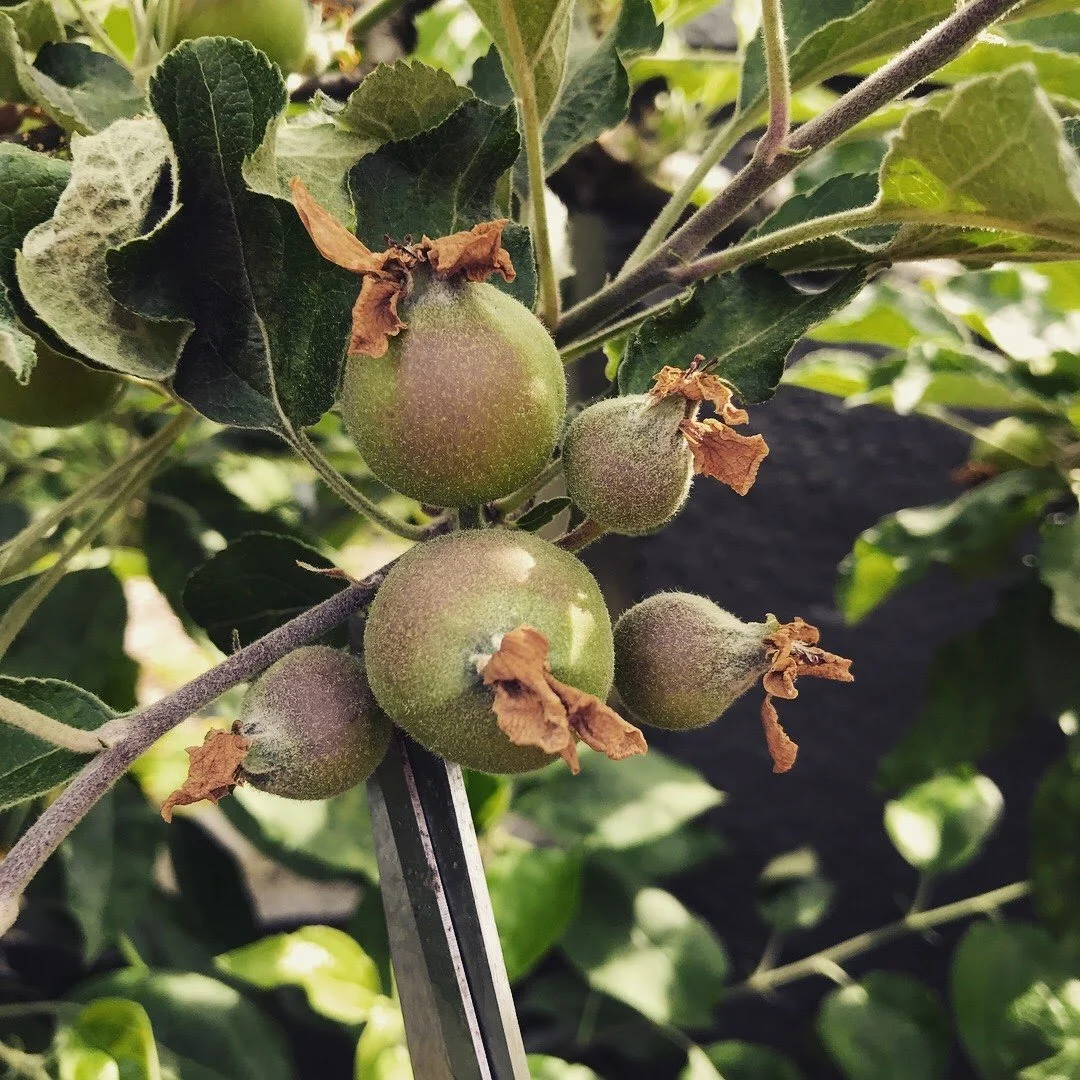
Gardening as ritual and seasonal practice
There is a particular kind of remembering that happens in the garden.
A remembering that lives in the body. The kind that wakes when your hands touch soil, when you notice the first swallowtail of late spring, when you begin to understand that the garden is not asking you to control and do and achieve — only to participate and enjoy.
In a world that asks us to move faster, produce more, and remain disconnected from our own rhythms, gardening offers something radically different. It asks us to slow down enough to notice. To observe. To tend. To trust timing we cannot force.
When approached as ritual, gardening becomes more than a task or hobby. It becomes a seasonal practice of relationship — with land, with food, with ancestry, with community, and with ourselves.
The Garden as a Living Calendar
The garden teaches us that every season has its purpose.
Winter is not failure because nothing is blooming. It is rest, decomposition, planning, dreaming.
Spring is emergence and vulnerability. Tender beginnings.
Summer is abundance, pollination, and rapid growth.
Autumn is harvest, release, gratitude, and returning nutrients back to the earth.
So much of modern life encourages us to remain in a perpetual “summer” — constantly productive, visible, and output-driven. But the natural world reminds us that rest is not separate from growth. It is part of it.
Gardening reconnects us to cyclical time instead of linear urgency.
Ritual Creates Relationship
Ritual does not need to be elaborate to be meaningful.
It can look like drinking your morning tea while checking on seedlings.
Saving seeds from a favorite tomato to plant again next year.
Speaking gratitude before harvesting herbs for dinner.
Watering slowly in the evening light after a difficult day.
Teaching a child the names of plants growing around them.
These small repeated acts become anchors. They root us in place and season.
Over time, the garden becomes less about “success” and more about relationship. You begin to notice patterns, weather shifts, pollinators, bird songs, soil texture, and your own emotional landscape changing alongside the seasons.
The garden starts speaking a language you can feel.
Reconnecting to Ancestral Ways of Knowing
For many people, gardening can also become a pathway back to ancestral memory and land-based practices.
Across cultures and generations, people have always gathered food, tended medicinal plants, saved seeds, honored seasonal transitions, and lived in closer relationship with local ecologies. While many of us have been disconnected from these traditions through migration, colonization, urbanization, or modern labor systems, the desire to reconnect often remains close beneath the surface.
Growing food, learning plant names, observing moon cycles, or cooking from the garden can become meaningful ways to rebuild those relationships with care and intention.
Not perfectly. Not performatively. Simply through practice.
A Different Kind of Productivity
One of the most beautiful things about gardening is that it gently reshapes our understanding of value.
A garden does not measure worth through efficiency.
It values patience. Observation. Reciprocity. Adaptation.
Some years the tomatoes thrive and the kale bolts early. Some seasons bring abundance while others bring loss. The practice is not about mastering nature. It is about learning how to remain present within change.
There is humility in that. And freedom too.
Beginning Where You Are
You do not need acreage or expertise to begin a seasonal gardening practice.
A pot of herbs on a windowsill can become ritual.
A community garden bed can become relationship.
A single fruit tree can teach patience, stewardship, and trust over years.
The invitation is not perfection. It is participation.
To notice the season you are in.
To place your hands in soil.
To remember that humans, too, are part of the living world.
And perhaps, in tending the garden, we remember how to tend ourselves and each other as well.